The Third Stage of Labor: After Your Baby is Born

In this article, you will find:
What happens in the minutes after birth?
This is from the birth of your baby until the delivery of the membranes (the amniotic bag that surrounded your baby) and placenta. The placenta can be actively managed with the help of drugs or delivered without drugs, known as passive management or a physiological third stage. Your doctor will discuss these options with you before labor.
Cutting the cord
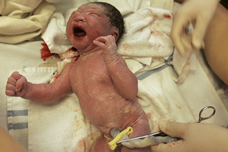
Once your baby has been delivered, it may be left for two to three minutes before it is cut. Allowing the cord to pulsate for a few minutes means your baby receives more blood from the placenta, which boosts his or her oxygen supply and blood volume. The cord will be clamped in two places, about 1 cm and 4 cm from the baby's belly, and is cut with scissors between the clamps.
Delivery of the placenta
How your placenta is delivered depends on your doctor. Many wait for it to happen naturally, but others offer an intramuscular (IM) injection of an oxytoxic drug in your thigh to make the uterus contract so that you can deliver the placenta and membranes quickly. Helping the uterus contract in this way reduces the risk of heavy bleeding occurring during the third stage, known as a postpartum hemorrhage (see Postpartum hemorrhage) and speeds up the delivery of the placenta, which can happen within 5 to 15 minutes after the birth of the baby. The risk of a postpartum hemorrhage occurring is the reason many units advise an active delivery. If you have a fibroid, active delivery will be advised because there is a heavy risk of bleeding.
Your doctor will place one of her hands just above your pubic bone to prevent the uterus from being pulled downward when she pulls on the cord. With her other hand, she will then apply gentle traction to the cord to help deliver the membranes and placenta. This is known as "controlled cord traction" (CCT).
Delivering the placenta naturally
If you decide to deliver the placenta without drugs, known as a physiological third stage, this can take up to an hour. Your doctor will encourage you to bear down and you may find squatting helps. The doctor will check the placenta to ensure it's complete and that none of it remains in the uterus, which can cause a postpartum hemorrhage.
Skin-to-skin contact with your newborn baby will help keep her warm – newborns don't have very good temperature control – and will also help the two of you start bonding.